Most people never think about how much their breasts weigh. Yet that weight affects comfort every single day. From choosing the right bra to preventing shoulder pain, breast weight plays a bigger role than many realize.
On average, a pair of breasts weighs between 2 and 4 pounds (1–2 kg), though the actual weight varies widely depending on body size, breast composition, and cup size. Larger breasts can weigh considerably more, placing extra demand on the shoulders, back, and the bra itself.
For lingerie brands and consumers alike, understanding breast weight isn't just an interesting fact—it's the foundation of better bra design and a more comfortable fit. In this guide, we'll explain what determines breast weight, how it changes over time, and why choosing the right bra matters just as much as choosing the right size.
How Much Does the Average Breast Weigh?
There isn't a single answer because every woman's body is different. Breast weight depends on breast volume, body composition, and tissue density.
As a general guide:
| Cup Size* | Approximate Weight (Pair) |
| A | 1–2 lb (0.5–0.9 kg) |
| B | 2–3 lb (0.9–1.4 kg) |
| C | 3–4 lb (1.4–1.8 kg) |
| D | 4–6 lb (1.8–2.7 kg) |
| DD and above | Often 6 lb (2.7 kg) or more |
*These are broad estimates only. Breast weight varies greatly between individuals, even among people who wear the same bra size.
Two women wearing a 34C bra may have noticeably different breast weights because breast tissue is made up of varying amounts of fat and glandular tissue. Body shape, genetics, and overall weight also influence the final number.
Instead of focusing on the exact weight, it's more useful to understand how that weight affects support and comfort.
What Makes Breasts Heavier?
Breasts naturally change throughout life. Their weight isn't fixed and may increase or decrease for several reasons.
Body Weight
Breasts contain a significant amount of fatty tissue. As body weight changes, breast size often changes as well.
Some women notice a considerable reduction in breast size after losing weight, while others experience only minor changes because they have a higher proportion of glandular tissue.
Hormonal Changes
Hormones influence breast size throughout life.
Many women experience temporary swelling before their menstrual period because hormonal fluctuations cause fluid retention. During pregnancy and breastfeeding, breasts become larger and heavier as milk-producing tissue develops.
Menopause can also change breast composition, making the tissue softer or altering breast volume.
Genetics
Genetics largely determines natural breast size and shape.
Even among women with similar heights and body weights, breast volume can differ significantly because of inherited characteristics.
Aging
Over time, skin elasticity decreases and supportive ligaments gradually stretch. While aging doesn't always increase breast weight, it can change how that weight is distributed, making support even more important.
Why Breast Weight Matters for Bra Design
A bra does much more than simply cover the body.
Its primary job is to support breast weight comfortably throughout the day.
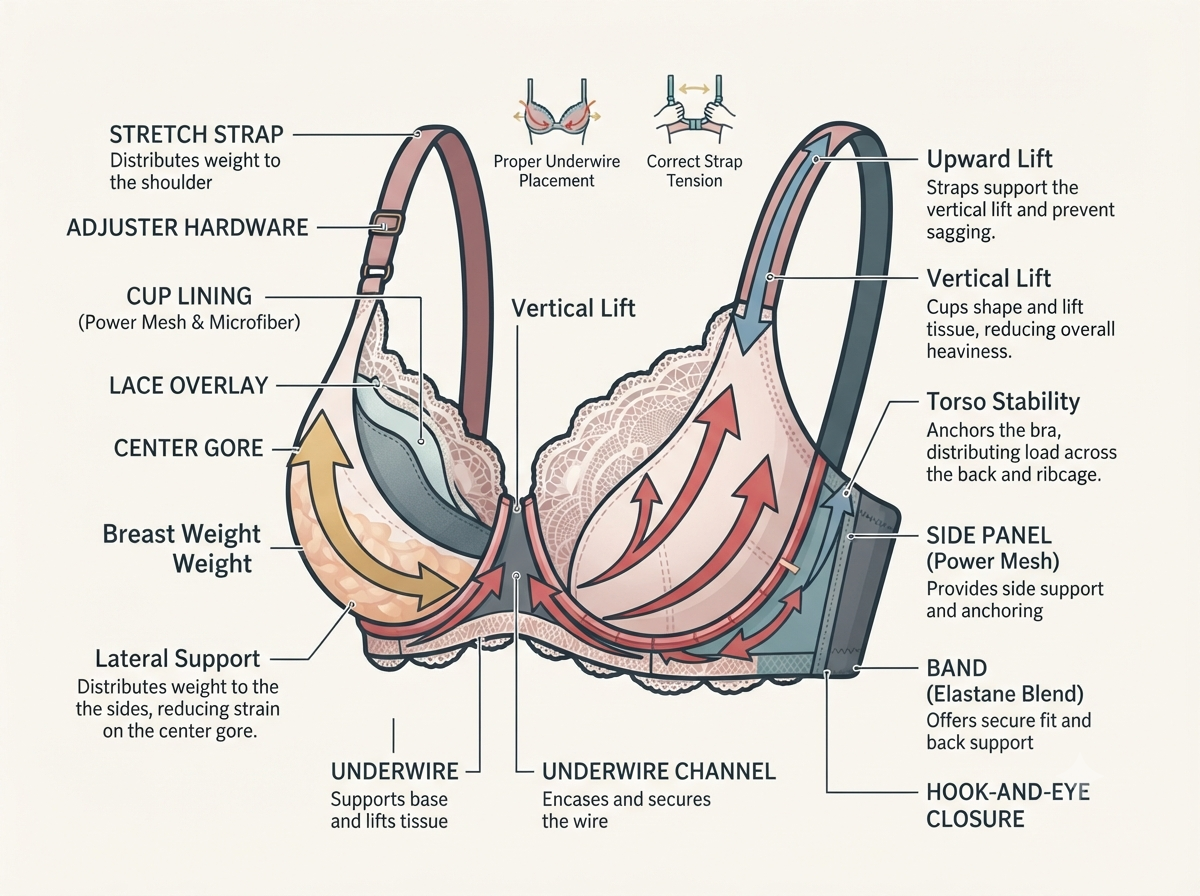
Many people assume shoulder straps do most of the work. In reality, a well-designed bra relies on several components working together.
A Supportive Band Does Most of the Work
The underband is the foundation of the bra.
When properly fitted, it provides most of the support by wrapping securely around the rib cage. A loose band shifts too much weight onto the straps, leading to shoulder discomfort and an unstable fit.
That's why replacing worn-out bras is important. As elastic loses its recovery, support decreases even if the cups still fit.
Wider Straps Improve Comfort
Straps don't necessarily carry all the weight, but they help stabilize the cups.
Wider straps spread pressure across a larger area of the shoulder, making heavier breasts feel more comfortable throughout the day.
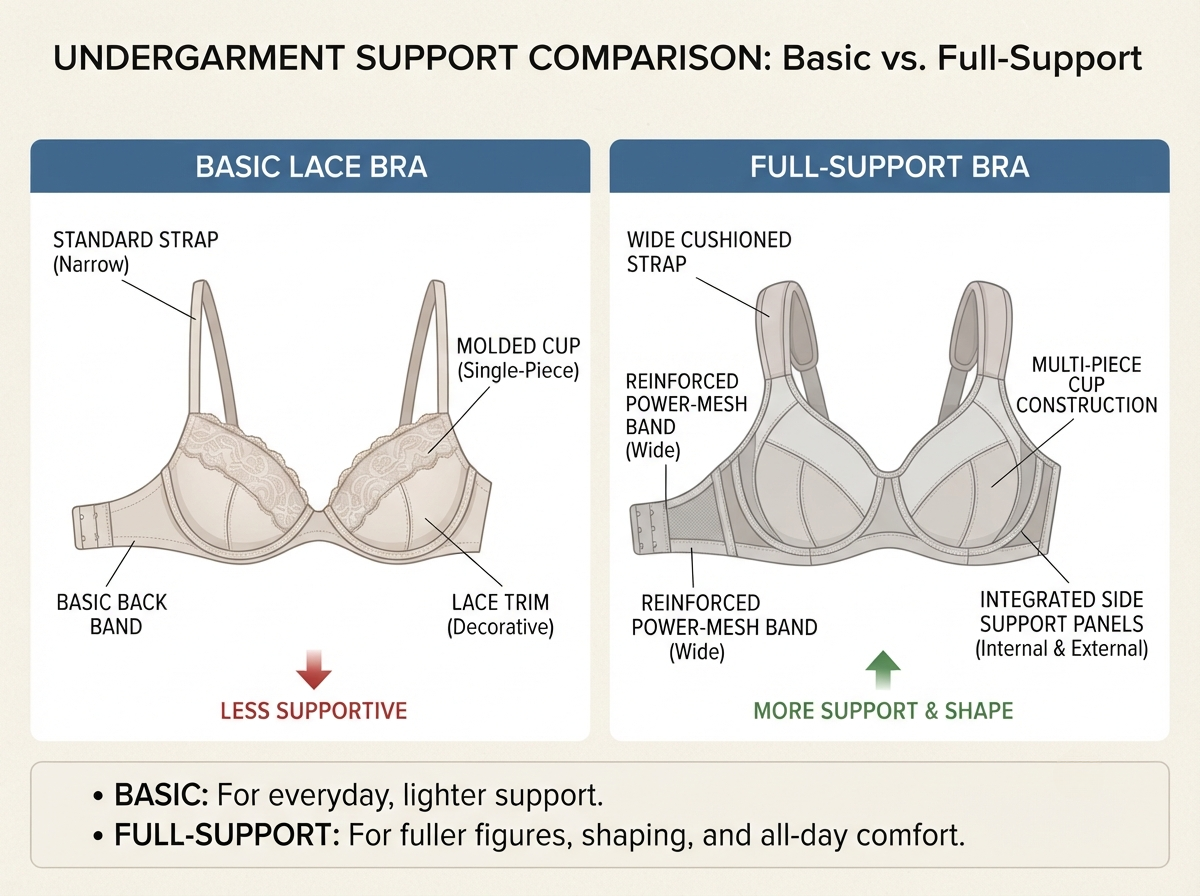
This is one reason full-support bras often feature broader, padded straps compared to fashion bras.
Cup Construction Matters
Not all bra cups are built the same.
Some cups are designed primarily for shaping, while others focus on lifting and supporting heavier breasts.
Cup construction may include:
Multi-piece cup panels
Side support panels
Molded cups
Full-coverage designs
Reinforced seams
These structural details help distribute breast weight more evenly and create a stable fit.
Why Two Bras Can Feel Completely Different
Have you ever tried two bras in exactly the same size, only to find that one feels incredibly comfortable while the other doesn't?
The difference often comes down to design rather than size.
Several factors affect how a bra handles breast weight.
Fabric Choice
High-quality fabrics maintain their shape longer and provide more consistent support.
Stretch fabrics offer flexibility, while firmer fabrics help control movement.
The right balance depends on the purpose of the bra.
Elastic Quality
Elastic gradually loses its ability to recover after repeated washing and wear.
Premium bras often use stronger elastics that continue providing support for a longer period.
Pattern Engineering
Bra patterns are carefully developed to balance comfort, support, and appearance.
Small adjustments to cup shape, wing height, or strap position can noticeably change how a bra fits.
This is one reason experienced lingerie manufacturers invest heavily in product development and wear testing.
Stitching and Construction
Strong stitching helps bras maintain their structure over time.
Poor construction may cause cups to lose shape, straps to twist, or seams to become uncomfortable after repeated use.
Quality manufacturing is often invisible to consumers—but they certainly notice the difference when wearing the product.
Does Breast Weight Change Over Time?
Yes. Breast weight changes naturally throughout life.
Some of the most common reasons include:
Puberty
Menstrual cycles
Pregnancy
Breastfeeding
Weight gain or loss
Menopause
Aging
These changes also explain why a bra that fit perfectly two years ago may no longer feel comfortable today.
Many lingerie experts recommend measuring your bra size every 6–12 months, especially after significant life changes such as pregnancy or major weight loss.
Regular fittings help ensure that the bra continues providing the level of support your body needs.
Choosing the Right Bra Based on Breast Weight
While cup size is important, breast weight should also influence your choice of bra.
For Smaller or Lighter Breasts
Many women find these styles comfortable:
Bralettes
Wireless bras
Lightly lined bras
Triangle bras
These designs prioritize comfort while providing gentle support.
For Medium Breast Weight
Popular everyday choices include:
These offer a balance between comfort and structure.
For Heavier Breasts
Additional support becomes increasingly important.
Look for features such as:
For sports or high-impact activities, a properly fitted sports bra helps reduce excessive breast movement and improves comfort during exercise.
What Lingerie Manufacturers Consider When Designing Supportive Bras
Creating a comfortable bra involves much more than choosing attractive lace or fashionable colors.
Manufacturers must carefully balance appearance, comfort, durability, and support.
Some of the factors considered during development include:
Fabric Performance
Different fabrics provide different levels of stretch, recovery, softness, and breathability.
Selecting the right material is one of the first steps in designing a supportive bra.
Elastic Strength
The elastic used in the band, straps, and wing sections directly affects long-term performance.
Higher-quality elastics help bras retain their fit after repeated washing.
Cup Engineering
Cup patterns are adjusted for different size ranges.
Larger cups often require additional reinforcement, stronger materials, or different panel constructions compared to smaller sizes.
Wear Testing
Before production begins, many manufacturers test bras on real wearers to evaluate:
This testing helps ensure the finished product performs well in everyday use.
For lingerie brands, these design details are just as important as style. A beautiful bra that doesn't provide proper support is unlikely to become a customer's favorite.
Frequently Asked Questions
How much does the average breast weigh?
For many women, each breast weighs roughly 1 to 2 pounds (0.5–1 kg), although larger breasts may weigh considerably more.
Does breast weight affect bra size?
Not directly. Bra size is determined by both the band measurement and breast volume. Two women with the same cup size may have different breast weights.
Can the wrong bra make heavy breasts feel heavier?
Yes. A poorly fitted bra may fail to distribute weight evenly, causing unnecessary pressure on the shoulders and back.
How often should I replace my bra?
Most everyday bras benefit from replacement every 6–12 months, depending on how frequently they are worn and washed. Worn elastic and stretched bands provide less support over time.
Do wider straps always mean a better bra?
Not necessarily, but wider straps often improve comfort for women with heavier breasts by distributing pressure across a larger area.
Final Thoughts
Breast weight is more than an interesting statistic—it influences comfort, posture, bra performance, and everyday confidence. While every woman's body is unique, understanding how breast weight affects support can help you make better choices when shopping for lingerie.
A well-designed bra isn't defined by cup size alone. Features like a supportive band, carefully engineered cups, quality fabrics, and durable elastic all work together to manage breast weight comfortably throughout the day.
For lingerie brands, retailers, and consumers, these details make the difference between a bra that's simply attractive and one that's truly comfortable to wear. By combining thoughtful design with quality materials and proper fit, manufacturers can create bras that deliver lasting support without sacrificing style.


